Are standard Japan itineraries too rushed? A data-driven pace analysis
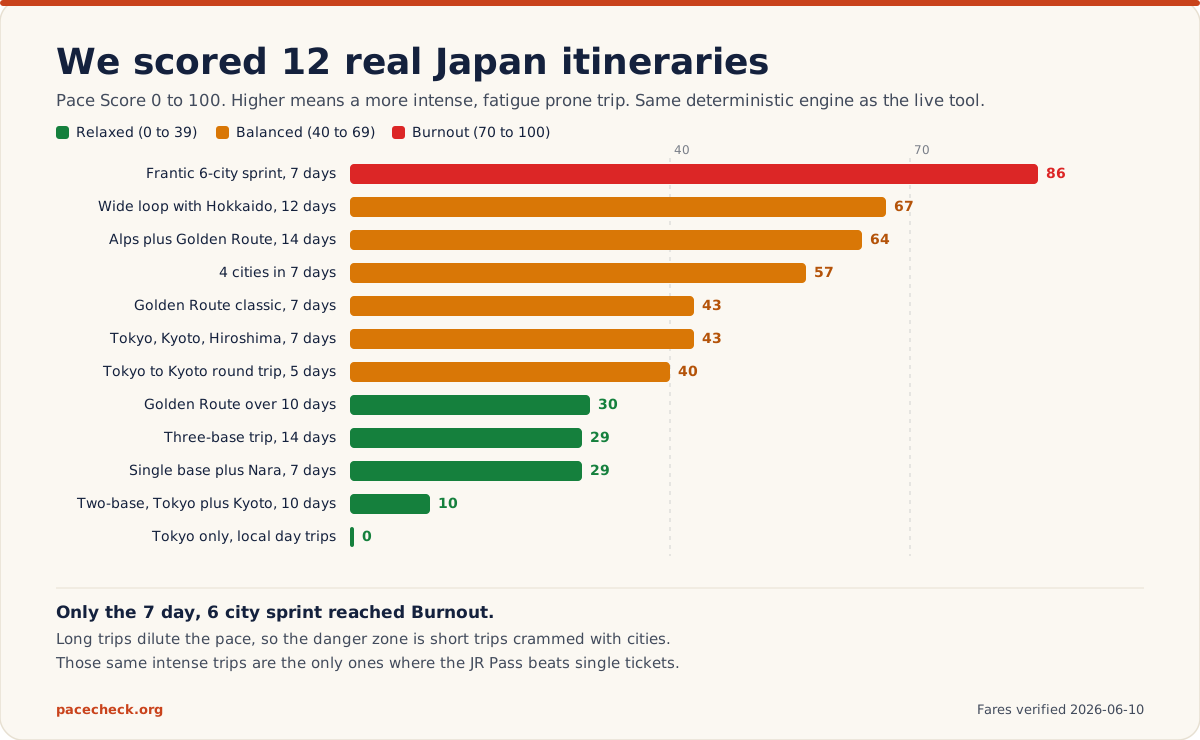
Three honest itineraries scored with the live PaceCheck formula: a 7-day, 6-leg multi-city rush scores 86 (Burnout), the classic 7-day Tokyo, Kyoto, Osaka attempt scores 43 (Balanced), and a 10-day two-base trip with day trips scores 10 (Relaxed). Higher scores mean more intense, not healthier.
The flagship chart scores 12 real Japan itineraries; three are broken down in detail below.
Fares are indicative and confirmed on the provider's site; they can vary.
Credibility: fares were checked against official JR fare search on 2026-10-01.
Timing: the Pace Score and verdict are instant, computed in your browser, no waiting.
Freshness: JR ended its nationwide round-trip discount in March 2026, so round trips are now priced as two one-way tickets. From 1 October 2026 the 7 day ordinary pass costs 53,000 JPY through overseas travel agents, while the official JR Pass website lists 50,000 JPY.
Privacy: we do not store your itinerary, and no email is required.
We may earn a commission if you book through some links on this page, at no extra cost to you.
The Pace Score is a deterministic metric from 0 to 100. Read how the Pace Score is calculated, including what counts as an intercity leg or base change. It is computed as:
T = intercity transit legs · H = base changes (each move to a different city, including the trip home)
The bands are fixed: 0 to 39 Relaxed, 40 to 69 Balanced, 70 to 100 Burnout. Higher always means a more intense schedule, never a healthier one.
Base changes carry real frictional cost beyond the train fare. Standard Japanese hotels check out at 10:00 AM and check in at 3:00 PM, leaving roughly a five hour window where the traveler is between rooms. During that window, the options are coin lockers at the station or luggage forwarding services. Yamato Takkyubin charges about 3,160 JPY to send a size 160 suitcase between Tokyo and Kyoto.
Case study 1: 7 days, 6 intercity legs (Burnout, 86)
Itinerary: Tokyo, Hakone, Kyoto, Osaka, Hiroshima, Kanazawa, Tokyo in seven days. With 6 intercity legs and 6 base changes over 7 days, the formula returns 86, squarely in the Burnout band.
This is the frantic multi city rush: a new bullet train almost every day, a new hotel almost every night. The traveler is checking out by 10:00 AM, on a Shinkansen by midday, and arriving in the next city in the late afternoon, six times in a week. The Tokaido corridor alone is heavy. Tokyo Station to Kyoto Station is 513 kilometers; a reserved seat on the Hikari, which is covered by the standard Japan Rail Pass, takes about 2 hours and 40 minutes and costs 13,850 JPY for non-pass holders. The faster Nozomi is not covered by the standard JR Pass and requires a separate supplement that varies by route and class, so the figure should be confirmed at booking rather than memorized.
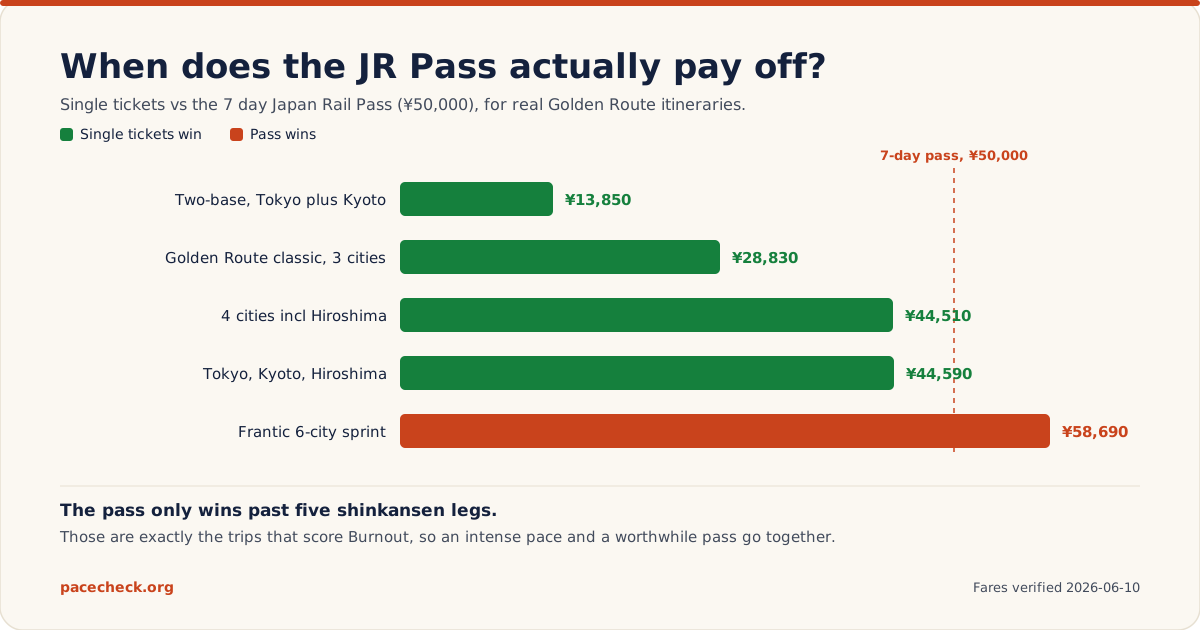
A 7-Day Ordinary Japan Rail Pass costs 53,000 JPY from overseas agents (50,000 JPY on the official website). Whether it pays off on a 6-leg route like this depends on the exact stations, so run the route through the calculator for the verdict. The deeper problem is not financial. A Burnout score of 86 predicts that physical fatigue and lost sightseeing hours will dominate the trip regardless of which ticket strategy is chosen.
Case study 2: 7 days, 3 intercity legs (Balanced, 43)
Itinerary: Tokyo, Kyoto, Osaka, Tokyo in seven days. With 3 intercity legs and 3 base changes over 7 days, the formula returns 43, the low end of Balanced. The classic Tokyo, Kyoto, Osaka loop is busy but not Burnout.
This is the route most first time visitors actually book. Three Shinkansen rides, three hotel changes, and meaningful time in each city. At a Pace Score of 43 the schedule is tight but recoverable, especially if the traveler uses luggage forwarding on transfer days and keeps walking on city days under control. The Hikari from Tokyo to Kyoto is the same 13,850 JPY, about 2 hours and 40 minutes, and a Japan Rail Pass is worth checking against single tickets for this exact route in the calculator.
The popular framing of this trip as "too rushed" overshoots. The honest read from the algorithm is Balanced, not Burnout.
Case study 3: 10 days, 1 intercity leg (Relaxed, 10)
Itinerary: Tokyo for 5 nights, one Shinkansen to Kyoto, Kyoto for 5 nights with day trips. With 1 intercity leg and 1 base change over 10 days, the formula returns 10, deep in the Relaxed band.
The two base strategy works because it removes accommodation volatility. The traveler packs once, moves once, and unpacks once, then flies home from Kansai instead of backtracking to Tokyo. From a Kyoto base, day trips to Osaka, Nara, and Himeji are fast, cheap, and require no luggage logistics. The JR Special Rapid between Kyoto and Osaka is 28 minutes for 580 JPY. None of those day trips count as base changes, so they do not raise the Pace Score; the algorithm only counts intercity legs in the itinerary and changes of hotel city.
A 14-Day Ordinary Japan Rail Pass at 84,000 JPY from overseas agents (80,000 JPY on the official website) is overkill for this shape, and so is the 7-day pass: the Tokyo to Kyoto ride (13,850 JPY) plus round-trip day trips to Osaka and Nara (2,600 JPY) come to about 16,450 JPY in single tickets, far below the 53,000 JPY 7-day pass. The calculator should be the final word. The point of the case is the Pace Score, not the ticket: with one base change and one Shinkansen ride, ten days in Japan can sit at 10 and stay there.
A prepaid Japan eSIM is one straightforward way to stay connected on arrival, and any reputable provider works. You can see one option.
Ready to check your own trip? Run your itinerary through the Pace Score calculator.
Frequently asked questions
Why does the classic Tokyo, Kyoto, Osaka loop score only 43?
The formula counts intercity legs and base changes against total days. Three legs and three base changes over seven days returns 43, the low end of Balanced. It feels busy because the city days are dense, but the algorithm only measures pacing structure, not sightseeing intensity inside each city.
What pushes an itinerary into Burnout?
Stacking many intercity legs and many base changes into few days. The 7 day, 6 leg multi-city rush scores 86 because the traveler is changing hotel city almost daily. Once the daily ratio of legs plus base changes climbs above roughly 1.4, the score crosses 70.
Is a 14 day Japan Rail Pass worth it for a 10 day trip?
Usually not. An 84,000 JPY 14 day pass (80,000 JPY on the official website) is overkill for a single intercity leg and one base change. Even the 53,000 JPY 7 day pass rarely pays off for that shape: the Tokyo to Kyoto ride plus day trips to Osaka and Nara come to about 16,450 JPY in single tickets. The calculator compares your exact legs and returns the honest verdict.
Do day trips count toward the Pace Score?
No. A day trip that returns to the same hotel does not add a base change. The algorithm only counts intercity legs in the itinerary and changes of hotel city, which is why a Kyoto base with day trips to Nara, Osaka, and Himeji can stay deep in the Relaxed band.
Does luggage forwarding change the score?
No. Luggage forwarding does not change the leg count or the base change count, so the score is identical with or without it. It does make Balanced and Burnout days physically easier, which is why we recommend it on transfer days regardless of score.